

Beyond the Patch

Keep more kids moving forward
As we all know, many children still have amblyopia even after months to years of treatment. Patching has been shown to be even less effective in older kids. Now you have another option. Expect more from amblyopia treatment.
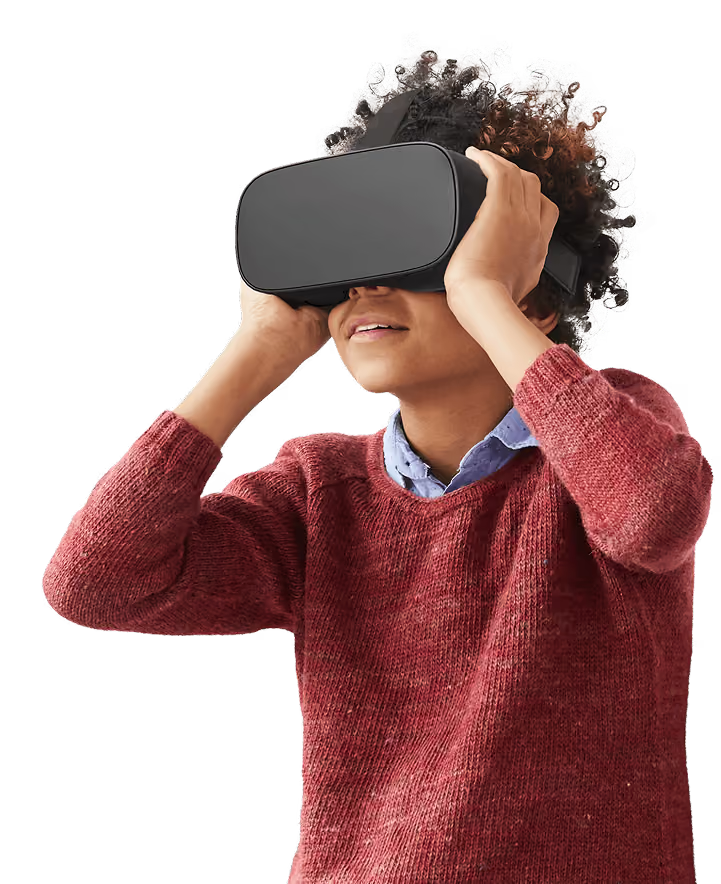
Treating older kids
Ages 8-12 gained as much vision as kids ages 4-7.

Previously-treated kids can still improve
Kids who have patched for months to years can still gain.
From mild to severe amblyopia
Proven gains, no matter where kids started.
Complete treatment with confidence
Vision gains that hold after end of treatment.
Dual-acting mechanism encourages both eyes to work together
Amblyopia patients watch favorite shows within a VR headset for one hour a day, six days a week, as treatment. Dual-acting algorithms modify the selected videos in real-time to promote weaker eye use and encourage patients' brains to combine input from both eyes. Unlike conventional treatments which penalize the stronger eye, Luminopia teaches patients to use both eyes together in a unique, binocular manner.
Only
1 hour
per day, 6 days a week, at home
Ages
4-12
FDA-cleared, Binocular, at-home treatment

View inside the Luminopia headset
Images are projected at distance


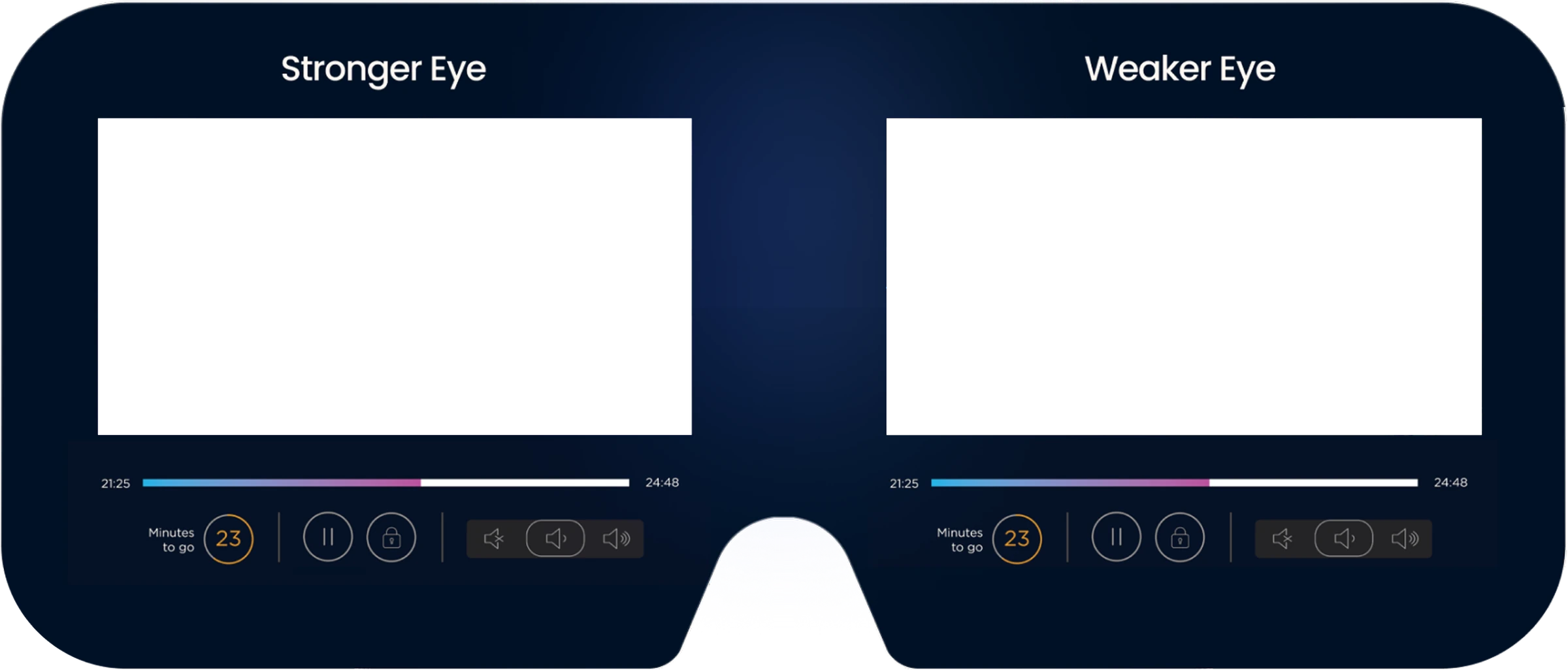
Lightweight immersive headset
Reducing Contrast
to the stronger eye overcomes suppression of the amblyopic eye
Dichoptic masking
blocks complementary parts of the image for each eye to encourage the brain to combine the videos into one complete image
Reducing Contrast
to the stronger eye overcomes suppression of the amblyopic eye
Dichoptic masking
blocks complementary parts of the image for each eye to encourage the brain to combine the videos into one complete image






























The best treatment is the one patients will actually do
85%
of children adhered to Luminopia
versus 44% for patching
94%
of parents prefer Luminopia over patching
Patient Story
A 9-year-old with severe amblyopia.

96%
Patient Compliance

Favorite show on
Luminopia: Wild Kratts
Lasting vision improvements
Visual acuity improvement over time
Majority of kids experienced stable or improved vision gains after ending treatment.
29.3%
continued improving (36/123)
68.3%
stable after stopping (84/123)
2.4%
recurrence, lost ≥2 lines after treatment discontinuation (3/123)
Demonstrated rare recurrence
Luminopia
2.4%
avg. 6 months
follow-up
Patching
24%
avg. 1 year
follow-up
Join your peer


1,600+
eyecare providers nationwide adopting Luminopia in their treatment plans
Luminopia in the news






Prescribe Luminopia just like any other treatment. We do the rest.
How it works for your practice
You prescribe through your EHR or by fax. Our pharmacy partner checks the family's coverage and manages billing. If a plan doesn't yet cover Luminopia, our Patient Access Program helps keep treatment affordable. Families can check their coverage here.
Enroll
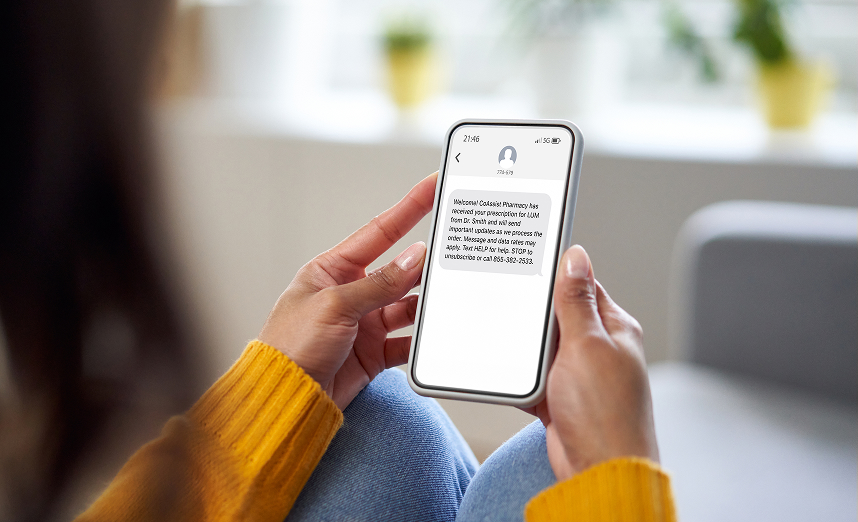
Parents get a text message to enroll and share their insurance details. Check status of your patients in the Luminopia Prescriber Portal.
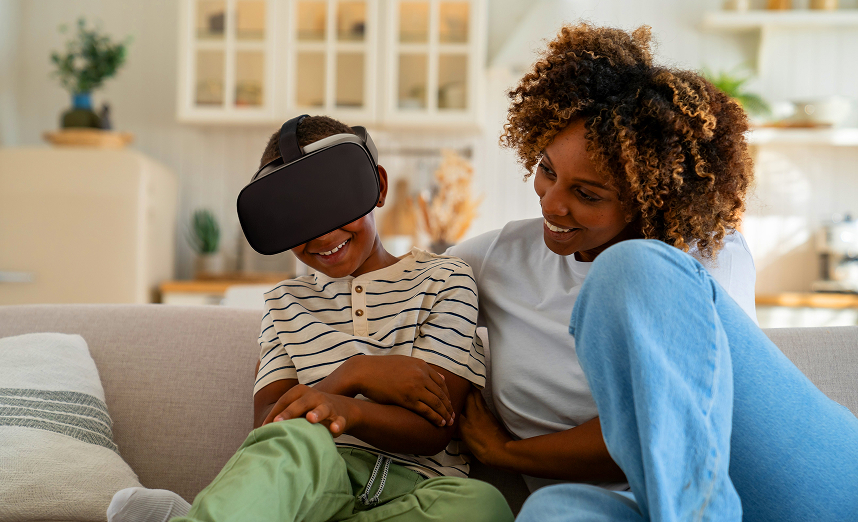
Headset ships to the family
Treatment starts at home. You follow up per your usual schedule.

Treatment complete
When treatment is complete, parents send the headset back with a prepaid label.
Questions eye care providers ask
Meet with us
Study Design
The phase 3 randomized trial vs glasses alone included 117 patients age 4-7 with unilateral amblyopia associated with anisometropia and/or strabismus. The trial evaluated Luminopia 1 hour/day, 6 days/week with full-time corrective refraction vs full-time corrective refraction alone. The primary endpoint was change in BCVA at 12 weeks.
Luminopia was evaluated via a Real-World Registry of 334 patients age 4 to <13 years with a diagnosis of amblyopia associated with anisometropia and/or strabismus. All aspects of treatment including dosage and duration were at the discretion of the prescribing physician. The primary endpoint was change in BCVA from time of Luminopa prescription to Last Follow-Up.
Indication
Luminopia is indicated for improvement in visual acuity in amblyopia patients age 4 to <13, associated with anisometropia and/or with mild strabismus. Luminopia is intended to be used as an adjunct to full-time refractive correction, in an at-home environment, and is for Prescription Use Only.
Safety
No serious adverse events* reported with Luminopia
Most common adverse event reported (treatment vs. control): Headaches (14.3% vs. 1.7%), all graded as mild and transient
Cases of new or worsening heterotropia were balanced between groups (7.1% vs. 8.5%)
Rate of all ocular adverse events similar between groups
Safety of Luminopia in children aged 8 - 12 is expected to be in line with the safety in children aged 4 - 7.
*Includes events classified with possible, probably, or definite relation to study treatment
Important Information About Luminopia
Patients should only use Luminopia while wearing their prescribed refractive correction under the headset
Patients should wear Luminopia while seated or lying down
Additional evaluation may be required for patients with a history of light-induced seizures, serious medical conditions, new or worsening eye-turn, or double vision
Patients should stop using Luminopia and contact you for additional evaluation if they experience worsening vision in either eye, headache, nausea, eye strain that doesn’t go away after usage, dizziness, or increased night terrors
Footnotes
[Patient Compliance] PUPiL Registry Overview. The PUPiL Registry is designed to collect real-world data from a diverse group of patients that have been prescribed Luminopia
Patient demographics and ocular history retrospectively collected
Vision outcomes collected at follow-up visit while on Luminopia and for a year after stopping Luminopia
All treatment decisions are at the discretion of the clinician
Patient cohort selected for analysis include: any patient in the Registry who has completed treatment with a follow-up visit +/- 6 weeks of the last date of treatment age 4-12 years, with unilateral anisometropic strabismic amblyopia, defined as 2 or more lines interocular difference with 20/40 or worse in the amblyopic eye
[can still gain] Change in amblyopic BCVA at 12 weeks was 1.81 lines with Luminopia vs 0.85 lines with glasses alone.
[no matter where kids started] Footnote text needed.
LUM-0262



